
Mirror polish has the reputation for marine work. In Wellington conditions a satin finish almost always outlasts it. Here is why.
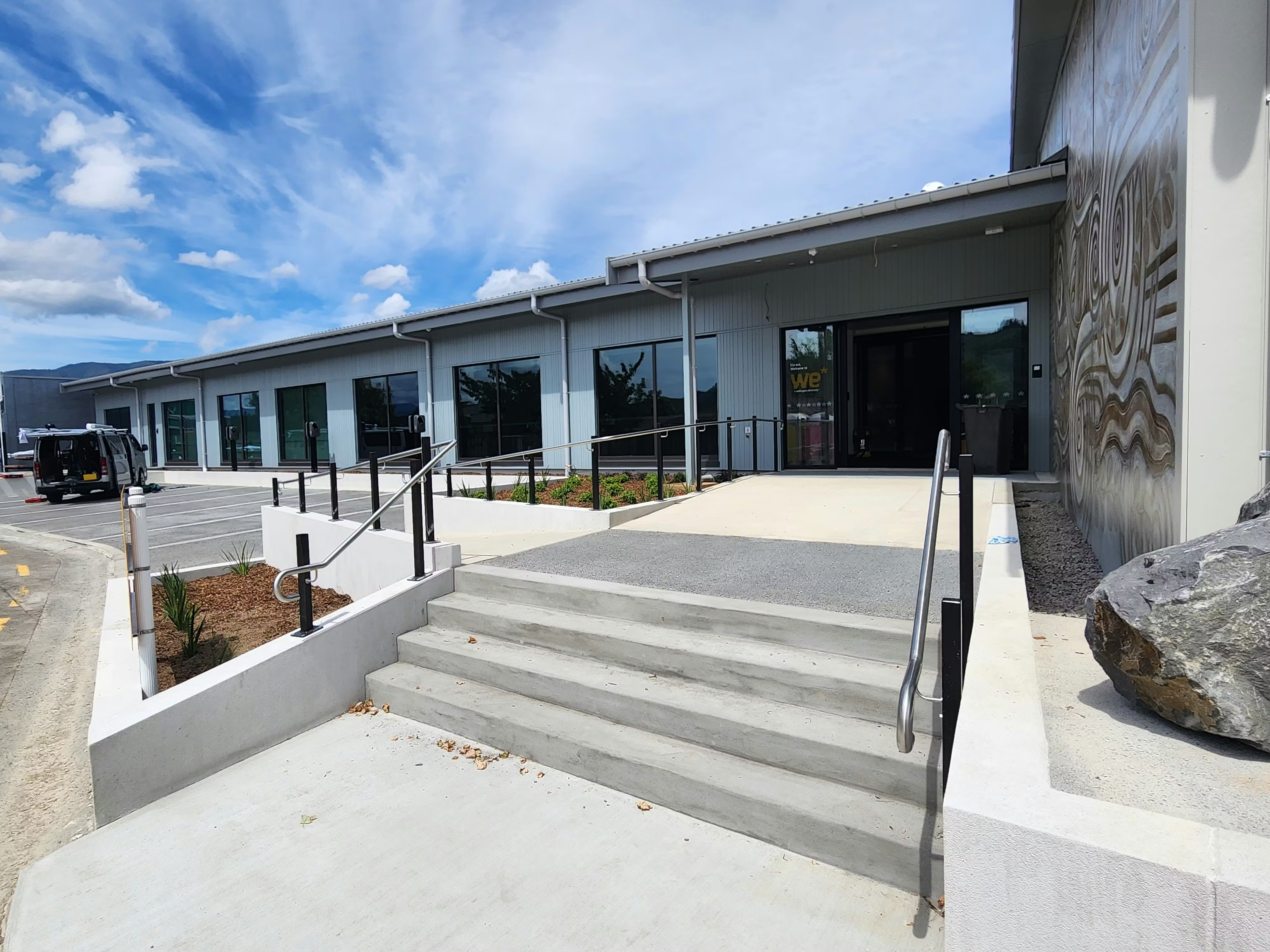
For anything outside in Wellington, and for anything near a pool, specify a satin finish. Mirror polish has the reputation for marine work, but in practice satin lasts longer and asks far less of you.
The reason has nothing to do with the shine. It is what each finishing process does to the surface of the steel.
Satin and brushed describe the same thing. A directional grain cut into the surface with abrasive belts, fine enough to feel smooth but visible if you look along the rail in the right light.
Mirror is polished with progressively finer compounds until the grain disappears altogether and the surface reflects like glass.
Both start as the same stainless. The difference is entirely in how the surface has been worked.
Getting to a true mirror takes aggressive mechanical buffing. That process smears the surface of the metal rather than cutting it cleanly, and as it goes it can push microscopic traces of polishing compound, or free iron picked up off the buffing wheel, into the surface.
Free iron sitting on stainless is where most rust complaints actually start. The stainless has not failed. It is contamination lying on top of it, and in a salt environment it takes hold quickly and spreads.
A satin finish is cut rather than smeared. Clean abrasive passes leave an open, even grain running in one direction, with the crystalline structure of the steel undisturbed underneath.
Splash lands, water evaporates, salt stays behind. That is the cycle on every coastal balustrade and every pool rail in this region, several times a day, for years.
A mirror finish is not actually flat at a microscopic level. Buffing leaves fine swirls running in every direction, and those swirls hold salt in place. Each one becomes a small pocket where chloride sits concentrated against the steel, which is the condition that starts pitting and tea staining.
A satin grain runs one way. Water runs along it and off, and takes most of the salt with it. Rain ends up doing a reasonable share of the cleaning you would otherwise be doing by hand.
A mirror rail is spectacular on handover day. Nothing else looks quite like it. Keeping it that way means washing it properly and often, because every bit of atmospheric fallout shows and because the finish gives salt somewhere to sit.
A satin rail is quieter to begin with and ages far better. It hides everyday marks, it does not show water spotting the same way, and it needs a fresh water rinse rather than a maintenance routine.
We are not saying mirror is a bad finish. We are saying it is a high maintenance one, and most people who choose it for an exposed site are not told that at the time.
Inside, away from salt and chlorine, mirror is a genuinely beautiful thing. Feature stair balustrades, entry handrails in a foyer, architectural detail where the reflection is the entire point. In a sheltered interior there is no corrosion driver, so the maintenance need largely disappears.
Bead blast is worth knowing about too. It gives an even matte grey with no directional grain at all, and it hides marks better than either option. On the right building it looks superb.
Finish helps at a pool. It does not solve it.
Chloramines concentrate in still air under a pool roof and in the splash zone. Correctly specified 316 can still pit and stain where the water chemistry tests within range. Getting the finish right improves the odds, and so do grade, ventilation and a rinse regime, but nobody should tell you a pool rail is a solved problem. Our guide to 304 versus 316 stainless covers the grade side of that conversation.
We finish to a consistent directional satin as standard on outdoor work, and we run the grain deliberately so water sheds down the rail rather than across it. Welds are ground back and blended into the grain, so there is no polished patch left where the joint was. A smeared spot in the middle of a clean grain is where corrosion starts.
Every piece is passivated before it leaves our Kāpiti Coast workshop, which removes the free iron picked up during fabrication. That step is invisible in the finished job and it is the one that decides whether a rail tea stains in its first winter.
Satin. A mirror finish traps chlorides in its multidirectional micro swirls, while a uniform satin grain lets salt and moisture rinse away. Satin also holds its appearance with far less maintenance in Wellington conditions.
Yes. The two words describe the same directional grain finish. You will also see it written as a grit number, and higher grit means a finer, less obvious grain.
Usually it is not the stainless rusting. It is free iron or polishing compound embedded in the surface during buffing, corroding on top of the steel. Passivation after fabrication removes it. Without that step, a coastal site will find it within a season.
It reduces it considerably but nothing stops it outright. Tea staining is a surface discolouration driven by chloride sitting on the steel. A satin grain sheds salt far better than a mirror finish, and a fresh water rinse now and then does the rest.
Satin, in marine grade 316, passivated, with a rinse regime agreed at the start. Even then, treat a pool as the hardest environment you can put stainless into rather than a solved one.
Yes. An existing mirror rail can be re cut to a satin grain on site or in the workshop, and it is a common fix once a coastal rail starts staining. It is cheaper than replacement and usually solves the recurring maintenance.
No. Mirror is the more expensive of the two because of the extra polishing stages. Satin costs less up front and less to live with, which is an unusual combination and part of why we specify it by default outdoors.
The Fabricator. We fabricate and finish stainless in our Kāpiti Coast workshop and install across Wellington City, Porirua, Lower Hutt, Upper Hutt, the Kāpiti Coast and the Wairarapa, for coastal homes, pool surrounds and commercial buildings.
Specifying stainless for an exposed site. Talk to The Fabricator about stainless steel handrails, stainless steel balustrades or pool fencing, and we will quote it on the right grade and the right finish the first time.
Talk to The Fabricator about stainless steel, aluminium fabrication, commercial kitchens or architectural metalwork. Free site visits across the region.
Get a free quote